Rotator Cuff and Shoulder Pain: Chiropractic Care at Life Medical
Key Points:
- The rotator cuff is a group of muscles and tendons that stabilize and move the shoulder joint
- Common causes include repetitive overhead movements, poor posture, muscle imbalances, and limited mobility
- Symptoms include shoulder weakness, pain when lifting the arm, nighttime pain, and reduced range of motion
- Chiropractic care addresses shoulder pain by improving joint mobility, correcting movement patterns, and reducing strain
- Early intervention prevents chronic shoulder problems and loss of function
- Life Medical offers comprehensive chiropractic care for rotator cuff and shoulder pain in St. Louis Park, Minnesota
Understanding Rotator Cuff Pain and How Chiropractic Care Can Help
Shoulder pain can make even simple tasks like lifting your arm or sleeping uncomfortable. Rotator cuff injuries are especially common and often develop slowly over time. At Life Medical, a healthcare practice in St. Louis Park, MN, we offer chiropractic care provided by licensed chiropractors to help patients improve shoulder movement and reduce strain that contributes to rotator cuff pain.
Whether you're struggling to reach into the backseat of your car, waking up with shoulder pain at night, or finding it difficult to lift objects overhead, rotator cuff problems can significantly impact your daily life. Understanding what's causing your shoulder pain and how to address it is the first step toward getting back to pain-free movement.
What Is the Rotator Cuff?
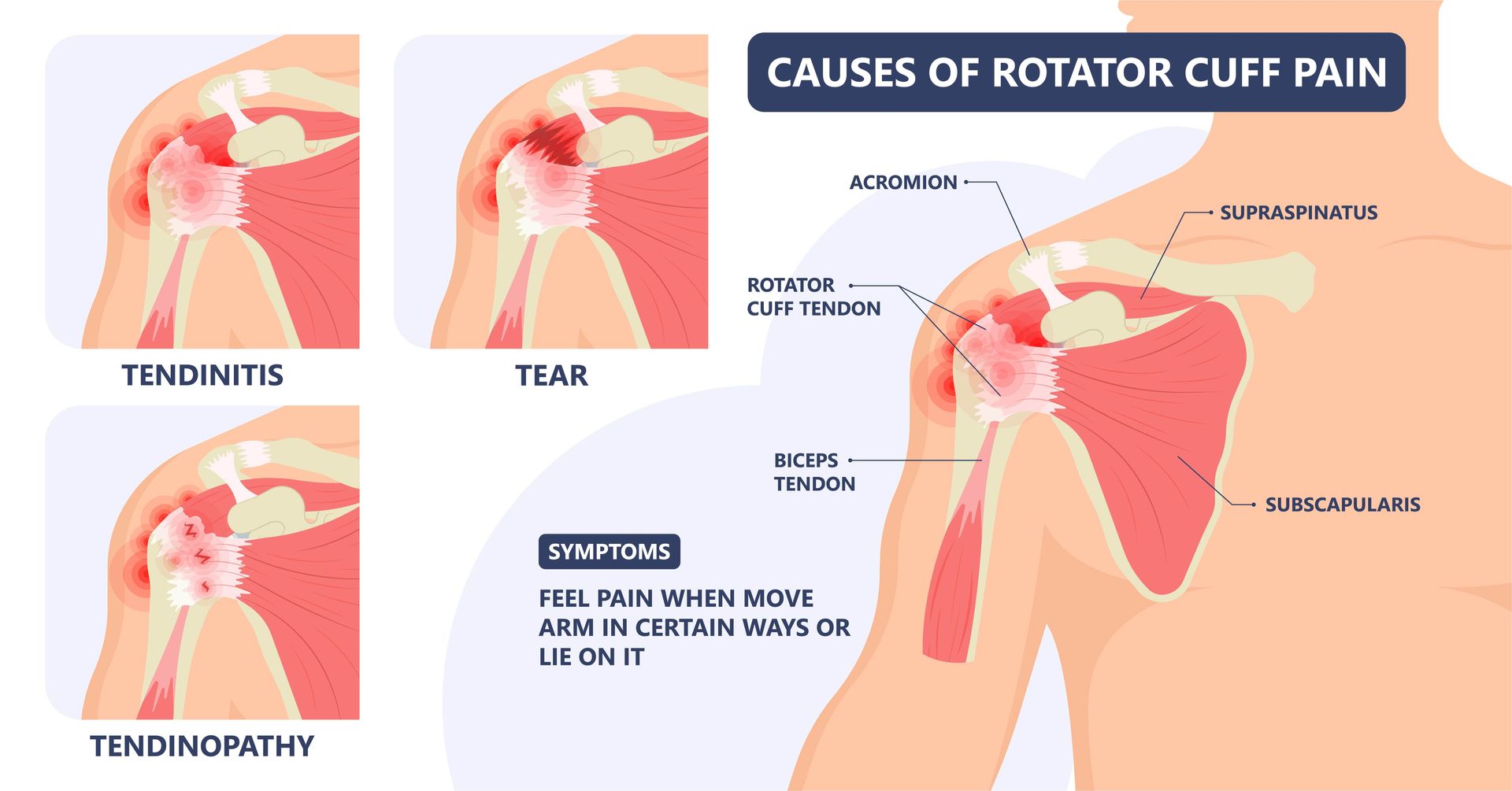
The rotator cuff is a group of muscles and tendons that help stabilize and move the shoulder joint. These four muscles work together to keep your upper arm bone (humerus) centered in the shallow shoulder socket while allowing the remarkable range of motion your shoulder is capable of.
The Four Rotator Cuff Muscles
Supraspinatus: Lifts your arm away from your side and provides stability during overhead movements. This muscle is most commonly injured because it passes through a narrow space where it can become compressed.
Infraspinatus: Rotates your arm outward and helps stabilize the shoulder during reaching movements.
Teres Minor: Works with the infraspinatus to rotate the arm outward and stabilize the shoulder joint.
Subscapularis: Rotates your arm inward and provides stability during pushing and pulling movements.
Why the Shoulder Is Vulnerable
Because the shoulder has a wide range of motion, it relies heavily on these muscles for support. Unlike the hip joint, which is a deep ball-and-socket joint with inherent bony stability, the shoulder socket is very shallow. This design allows for incredible mobility but depends on the rotator cuff muscles to maintain stability.
Think of the rotator cuff as the dynamic stabilization system for your shoulder. When these muscles are working properly, they create a stable platform for all shoulder movements. When they're injured, inflamed, or not functioning correctly, every shoulder movement becomes problematic and painful.
Common Causes of Rotator Cuff Pain
Understanding what contributes to rotator cuff problems helps you prevent and address shoulder pain effectively.
Repetitive overhead movements: Activities that require frequent reaching overhead gradually stress the rotator cuff tendons. Common culprits include:
- Painting walls or ceilings
- Shelving work or stocking overhead
- Swimming (particularly freestyle and butterfly strokes)
- Baseball pitching or tennis serving
- Construction work
- Hair styling
- Teaching (writing on boards)
Each overhead reach compresses the rotator cuff tendons in the space under your shoulder blade. Hundreds or thousands of repetitions over time can lead to tendon irritation and inflammation.
Poor posture: Forward head posture and rounded shoulders dramatically affect rotator cuff function. When your shoulders round forward:
- The space available for rotator cuff tendons decreases
- Shoulder blade position becomes abnormal
- Rotator cuff muscles work inefficiently
- Muscle imbalances develop
- Strain on tendons increases with every movement
Modern lifestyles involving prolonged computer work, driving, and smartphone use create postural patterns that set the stage for rotator cuff problems.
Muscle imbalances: The shoulder depends on balanced strength between multiple muscle groups. Common imbalances include:
- Weak rotator cuff muscles compared to larger shoulder muscles
- Tight chest muscles pulling shoulders forward
- Weak upper back muscles that can't counteract chest tightness
- Underdeveloped shoulder blade stabilizers
- Dominant upper trapezius with weak lower trapezius and serratus anterior
These imbalances alter how forces are distributed through the shoulder, overloading the rotator cuff.
Limited shoulder or upper back mobility: Restrictions in the shoulder joint itself or in the thoracic spine (upper back) force the rotator cuff to compensate:
- Stiff shoulder capsule increases tendon compression
- Limited thoracic spine extension alters shoulder mechanics
- Restricted shoulder blade movement changes rotator cuff function
- Tight muscles limit normal shoulder patterns
When mobility is restricted, your body finds compensatory movement patterns that often overload the rotator cuff.
Previous injuries: Old shoulder injuries create lasting problems:
- Scar tissue from healed injuries may restrict movement
- Strength deficits from incomplete rehabilitation
- Altered movement patterns developed during injury recovery
- Joint instability from previous sprains or dislocations
- Unresolved muscle imbalances
Even injuries from years ago can contribute to current rotator cuff pain if the shoulder never fully recovered proper function.
Age-related changes: While rotator cuff problems can occur at any age, certain changes become more common as we get older:
- Reduced blood flow to tendons decreases healing capacity
- Normal tendon degeneration over time
- Bone spurs that narrow the space for rotator cuff tendons
- Accumulated effects of years of poor posture or repetitive stress
- Loss of muscle mass and strength if not maintained
Sudden trauma: Acute injuries can damage the rotator cuff:
- Falls onto an outstretched arm
- Lifting something too heavy with poor technique
- Sudden pulling or jerking mot7ions
- Sports impacts or collisions
- Car accidents
Signs Rotator Cuff Pain May Be Developing
Recognizing early warning signs allows you to seek care before shoulder problems become severe and chronic.
Shoulder weakness: One of the earliest signs of rotator cuff problems is weakness when lifting your arm, particularly in specific directions:
- Difficulty lifting your arm away from your side
- Weakness when reaching overhead
- Trouble holding your arm in raised positions
- Inability to carry bags or objects on the affected side
- Weakness when rotating your arm outward
This weakness occurs because the injured or irritated rotator cuff muscles can't generate normal force.
Pain when lifting the arm: A characteristic pattern of rotator cuff pain is discomfort during arm elevation:
- Pain between 60 and 120 degrees of arm elevation (the "painful arc")
- Temporary relief as you lift your arm above shoulder height
- Pain when lowering your arm back down through the same range
- Catching or clicking sensations during movement
This pain pattern occurs because the inflamed rotator cuff tendons get compressed in the tight space under the shoulder blade during mid-range arm elevation.
Difficulty reaching behind the back: Rotator cuff problems often make it hard to:
- Reach into your back pocket
- Fasten a bra
- Tuck in a shirt
- Reach behind to grab a seatbelt
- Scratch your back
These movements require internal rotation and extension, which stress injured rotator cuff structures.
Nighttime shoulder pain: Many people with rotator cuff problems experience worse pain at night:
- Pain when lying on the affected shoulder
- Difficulty finding a comfortable sleeping position
- Waking up with shoulder pain or numbness
- Morning stiffness in the shoulder
Nighttime pain occurs because lying on the shoulder compresses already-irritated tendons, and reduced movement during sleep allows inflammation and stiffness to build.
Reduced range of motion: As rotator cuff problems progress, you may notice:
- Inability to reach as high as before
- Decreased ability to rotate your arm
- Stiffness when trying to move your shoulder
- Gradual loss of normal shoulder mobility
This progression from pain to stiffness indicates the problem is worsening and needs attention.
Other warning signs:
- Grinding or popping sensations in the shoulder
- Visible muscle wasting in the shoulder or shoulder blade area
- Compensatory movements (using your body or other arm to assist)
- Avoiding activities that use the affected shoulder
- Increasing reliance on the other arm for daily tasks
Why Shoulder Pain Often Becomes Chronic
Understanding why rotator cuff pain persists helps explain why professional care is often necessary.
Many people continue using their shoulder despite discomfort. Over time, poor movement patterns can increase strain on the rotator cuff. This creates a cycle of continued irritation and worsening symptoms:
Continued use despite pain: Unlike a broken bone that you can't use, shoulder pain allows you to continue activities, often with modified movements. This ongoing use:
- Prevents adequate healing time
- Reinforces poor movement patterns
- Gradually worsens tissue damage
- Allows inflammation to persist
Development of compensation patterns: When your shoulder hurts, your body automatically adjusts how you move to avoid pain. These compensations:
- Overwork other muscles and structures
- Create imbalances that perpetuate the problem
- Spread strain to the neck, upper back, and opposite shoulder
- Become habitual even after initial pain decreases
Progressive tissue changes: Without proper treatment, rotator cuff problems can progress:
- Initial inflammation becomes chronic
- Acute tendon irritation becomes tendinosis (tendon degeneration)
- Partial tendon tears may enlarge
- Scar tissue and adhesions develop
- Joint capsule tightens (frozen shoulder can develop)
Muscle weakness and atrophy: Painful shoulders lead to decreased use, which causes:
- Rotator cuff muscle weakness
- Loss of muscle mass
- Reduced shoulder stability
- Increased vulnerability to further injury
Shoulder blade dysfunction: Chronic shoulder problems affect shoulder blade mechanics:
- Abnormal shoulder blade movement patterns
- Weakness in shoulder blade stabilizing muscles
- Reduced ability to support the shoulder joint
- Additional strain on rotator cuff muscles
Psychological factors: Persistent shoulder pain affects your mindset:
- Fear of movement and re-injury
- Reduced activity levels
- Decreased confidence in shoulder function
- Frustration with ongoing limitations
These factors combine to make rotator cuff pain a chronic, worsening condition when left unaddressed.
How Chiropractic Care Helps Shoulder Pain
Chiropractic care focuses on improving how the shoulder, upper back, and neck move together. This comprehensive approach addresses both the shoulder itself and the regions that influence shoulder function.
At Life Medical, chiropractic care may include:
Joint mobility work: Restoring proper motion throughout the shoulder complex and related areas:
Shoulder joint adjustments: Gentle mobilization and manipulation to:
- Improve range of motion in the glenohumeral joint (ball and socket)
- Reduce joint restrictions that alter rotator cuff mechanics
- Restore normal joint mechanics
- Decrease pain and inflammation
Shoulder blade (scapular) mobilization: The shoulder blade must move properly for healthy rotator cuff function. Treatment addresses:
- Restricted shoulder blade movement
- Abnormal scapular positioning
- Joint restrictions affecting scapular motion
Thoracic spine adjustments: The upper back significantly influences shoulder function. Chiropractic adjustments to the thoracic spine:
- Restore normal upper back mobility
- Improve posture and shoulder positioning
- Reduce compensatory stress on the shoulder
- Address referred pain from the upper back
Rib adjustments: The ribs attach to the thoracic spine and affect shoulder mechanics. Rib mobilization:
- Improves chest wall mobility
- Reduces restrictions that limit shoulder movement
- Addresses referred pain patterns
Cervical spine (neck) care: Neck problems often contribute to shoulder pain. Neck adjustments:
- Improve neck mobility
- Address nerve-related shoulder pain
- Reduce referred pain from the neck
- Improve posture affecting shoulder position
Soft tissue support: Addressing muscle and fascia restrictions that contribute to rotator cuff pain:
Targeted massage: Deep tissue work on:
- Rotator cuff muscles to reduce tension and improve circulation
- Surrounding shoulder muscles that may be compensating
- Upper back muscles affecting shoulder blade function
- Neck muscles contributing to postural problems
Myofascial release: Releasing restrictions in the connective tissue (fascia) that:
- Limits shoulder movement
- Creates pain and stiffness
- Alters normal movement patterns
Trigger point therapy: Addressing muscle knots (trigger points) that:
- Cause local and referred shoulder pain
- Limit muscle function
- Perpetuate abnormal movement patterns
Instrument-assisted soft tissue mobilization: Using specialized tools to:
- Break down scar tissue
- Release adhesions
- Improve tissue quality and mobility
Stretching: Guided stretching to:
- Restore flexibility to tight muscles
- Improve shoulder range of motion
- Support proper movement mechanics
Postural guidance: Correcting posture to reduce ongoing strain on the rotator cuff:
Workspace ergonomics: Recommendations for:
- Computer monitor height and position
- Keyboard and mouse placement
- Chair height and support
- Desk setup to minimize shoulder stress
Sleeping positions: Guidance on:
- Proper pillow use to support the shoulder
- Sleeping positions that don't compress the rotator cuff
- Using pillows to support the arm when side-sleeping
Daily habits: Identifying and modifying:
- Smartphone use and forward head posture
- Driving position
- Carrying bags and purses
- Lifting techniques
Postural exercises: Strengthening and stretching to:
- Open the chest and reduce rounded shoulders
- Strengthen upper back muscles
- Improve awareness of proper posture
- Build endurance to maintain good alignment
Movement assessment: Analyzing how you move to identify and correct problematic patterns:
Functional movement screening: Watching you perform activities like:
- Reaching overhead
- Reaching behind your back
- Pushing and pulling movements
- Lifting objects
- Sports or work-specific movements
This assessment reveals:
- Compensatory movement patterns
- Muscle recruitment issues
- Range of motion limitations
- Specific movements that trigger pain
Gait and posture analysis: Observing:
- How you stand and walk
- Shoulder position at rest
- Asymmetries between sides
- Overall body mechanics
Movement retraining: Teaching:
- Proper shoulder mechanics during daily activities
- How to avoid problematic movement patterns
- Techniques for pain-free movement
- Progressive return to full function
Therapeutic exercises: Building strength, stability, and proper movement patterns:
Rotator cuff strengthening: Progressive exercises to:
- Strengthen weak rotator cuff muscles
- Build endurance for sustained activities
- Improve muscle balance
- Support shoulder stability
Shoulder blade stabilization: Exercises targeting muscles that control shoulder blade position and movement:
- Serratus anterior strengthening
- Lower trapezius activation
- Rhomboid strengthening
- Integrated shoulder blade exercises
Flexibility work: Stretches to maintain or improve:
- Shoulder capsule mobility
- Muscle flexibility
- Thoracic spine extension
- Overall shoulder range of motion
Proprioception and control: Exercises that improve:
- Body awareness and shoulder position sense
- Neuromuscular control
- Dynamic stability
- Coordination
This approach helps reduce unnecessary stress on the shoulder and supports natural healing of the rotator cuff.
Advanced Treatment Modalities for Shoulder Pain
At Life Medical, we complement hands-on chiropractic care with advanced technologies:
Shockwave Therapy
Shockwave therapy is particularly effective for chronic rotator cuff tendinopathy:
- Stimulates tendon healing and regeneration
- Increases blood flow to damaged tissues
- Breaks down scar tissue and calcifications
- Provides lasting pain relief
This non-invasive treatment accelerates recovery from stubborn rotator cuff problems that haven't responded to other conservative care.
Laser Therapy
Low-level laser therapy supports shoulder healing by:
- Reducing inflammation in rotator cuff tendons
- Accelerating tissue repair
- Decreasing pain
- Improving cellular function
Laser therapy is painless and works well alongside other treatments.
Other Supportive Modalities
Ice therapy: Reduces acute inflammation and pain in injured rotator cuff tissues.
Heat therapy: Relaxes tight muscles and increases blood flow to promote healing.
Electrical stimulation: Reduces muscle spasm, controls pain, and supports healing.
Kinesiology taping: Provides support and proprioceptive feedback to improve shoulder mechanics during activities.
What to Expect During Chiropractic Care for Shoulder Pain
Understanding the treatment process helps you feel prepared and confident.
Initial Evaluation
Your first visit includes a comprehensive shoulder assessment:
- Detailed discussion of your shoulder pain history
- Questions about activities that worsen or improve symptoms
- Examination of shoulder range of motion and strength
- Assessment of shoulder blade movement
- Evaluation of neck and upper back mobility
- Postural analysis
- Functional movement testing
- Special orthopedic tests for rotator cuff integrity
- Neurological testing if needed
This thorough evaluation helps identify the exact cause of your shoulder pain and determines if chiropractic care is appropriate or if imaging or specialist referral is needed.
Treatment Plan Development
Based on your evaluation, we create a personalized treatment plan that addresses:
- Your specific rotator cuff problem
- Contributing factors like posture or movement patterns
- Your goals and activity level
- Timeline for improvement
- Home exercise and self-care strategies
Treatment Sessions
Typical treatment sessions include:
- Joint mobilization and adjustments
- Soft tissue therapy
- Therapeutic exercises
- Modality application when appropriate
- Progressive advancement as you improve
- Education and home care instruction
Timeline and Expectations
Shoulder pain recovery varies based on:
- Severity and duration of the problem
- Extent of tissue damage
- Contributing factors
- Your compliance with home exercises and recommendations
- Individual healing capacity
Typical progression:
Weeks 1-2: Focus on pain reduction, improving mobility, and addressing acute inflammation. Many patients notice decreased pain intensity and improved sleep.
Weeks 3-6: Progressive strengthening begins, movement patterns improve, functional activities become easier.
Weeks 7-12: Continued strengthening and return to full activities. Most patients experience significant improvement or complete resolution.
Ongoing: Maintenance exercises and strategies to prevent recurrence.
Chronic shoulder problems that developed over months or years typically require longer treatment than recent injuries.
Complementary Approaches to Shoulder Pain Care
Life Medical's integrative model allows us to combine chiropractic care with other services when beneficial.
Physical Therapy
Our physical therapy services offer:
- Advanced shoulder rehabilitation programs
- Sport-specific training
- Post-surgical rehabilitation if surgery becomes necessary
- Specialized equipment and exercise progressions
Pain Management
For severe or complex shoulder pain, our pain treatment services provide additional support.
Primary Care Coordination
Our primary care physicians can:
- Order imaging (X-ray, MRI) when needed
- Manage underlying conditions affecting shoulder health
- Coordinate with orthopedic specialists for complex cases
- Provide comprehensive health management
Nutritional Support
Nutritional therapy supports shoulder healing through:
- Anti-inflammatory diet strategies
- Ensuring adequate nutrients for tendon repair
- Weight management to reduce shoulder stress
- Overall wellness optimization
Integrative Medicine Approach
Our integrative medicine philosophy means we use the best tools from various healthcare disciplines to give you optimal results.
Preventing Rotator Cuff Problems
Once your shoulder improves, prevention becomes crucial:
Strengthening and Conditioning
Regular rotator cuff exercises: Maintain strength even when pain-free to prevent recurrence.
Shoulder blade stabilization: Continue exercises that support proper shoulder mechanics.
Balanced upper body strength: Develop balanced strength between chest, back, and shoulder muscles.
Core stability: A strong core supports upper body mechanics and reduces shoulder strain.
Posture and Ergonomics
Maintain good posture: Stay aware of shoulder position throughout the day.
Optimize workstation: Ensure ergonomic setup for computer work and other tasks.
Take regular breaks: Avoid prolonged static positions that strain the shoulder.
Use proper technique: Learn and maintain correct form for lifting, reaching, and carrying.
Activity Modifications
Warm up properly: Always prepare your shoulders before activity or exercise.
Progress gradually: Increase intensity, duration, or load slowly to allow adaptation.
Avoid overuse: Balance activity with adequate rest and recovery.
Listen to your body: Address early warning signs before they become major problems.
Regular Maintenance
Ongoing exercise: Continue a basic shoulder maintenance program even when symptom-free.
Periodic check-ins: Occasional maintenance chiropractic visits can address minor issues before they worsen.
Stay active: Regular movement and exercise keep shoulders healthy and resilient.
When to Seek Care for Shoulder or Rotator Cuff Pain
Shoulder pain that lingers or keeps returning can make daily tasks difficult and limit your ability to stay active. Rotator cuff pain may worsen over time if movement issues and joint restrictions are not addressed.
Seek care if you experience:
- Shoulder pain lasting more than two weeks
- Pain that interferes with sleep or daily activities
- Progressive weakness in the shoulder
- Difficulty performing work or recreational activities
- Pain that returns despite rest
- Clicking, popping, or catching sensations
- Visible changes in shoulder appearance or position
At Life Medical in St. Louis Park, MN, we offer chiropractic care provided by licensed chiropractors to help improve shoulder movement, reduce strain, and support long-term comfort. Care focuses on restoring proper motion in the shoulder, upper back, and surrounding areas.
If shoulder pain is affecting your sleep, work, or activity level, an evaluation may help identify what is contributing to the problem.
Don't wait for shoulder pain to become chronic and debilitating. Early intervention provides the best outcomes.
To get started, call Life Medical at (952) 933-8900 or book an appointment to discuss your shoulder or rotator cuff pain and learn how chiropractic care may help you move more comfortably.
Visit our chiropractic care page to learn more about our services, or use our patient portal to request an appointment online.
Explore our full range of healthcare services to see how Life Medical's integrative approach supports your complete health and wellness.
FAQs About Rotator Cuff and Shoulder Pain
What causes rotator cuff pain?
Repetitive use, poor posture, and limited mobility are common causes. Overhead activities, muscle imbalances, previous injuries, and age-related changes also contribute to rotator cuff problems.
Can rotator cuff pain heal on its own?
Some mild cases improve with rest, but ongoing pain often benefits from care. Without addressing underlying movement problems, posture issues, and muscle imbalances, rotator cuff pain frequently persists or returns.
Can chiropractic care help shoulder pain?
Chiropractic care may help improve movement and reduce strain. Treatment addresses joint restrictions, muscle imbalances, postural problems, and movement patterns contributing to rotator cuff pain.
How long does it take for rotator cuff pain to heal?
Recovery time varies based on severity, duration of symptoms, and individual factors. Acute rotator cuff injuries may improve in 4-8 weeks, while chronic problems may require 3-6 months of consistent care.
What does rotator cuff pain feel like?
Rotator cuff pain typically causes aching in the shoulder that worsens with overhead reaching, difficulty lifting the arm to the side, weakness, nighttime pain, and pain when reaching behind the back.
Can I exercise with rotator cuff pain?
It depends on the severity. Some exercises may be beneficial while others should be avoided. Your chiropractor can guide you on appropriate exercises and modifications based on your specific condition.
Will I need surgery for my rotator cuff?
Most rotator cuff problems respond well to conservative care like chiropractic treatment. Surgery is typically reserved for complete tears or cases that don't improve with appropriate conservative care.
What activities should I avoid with rotator cuff pain?
Avoid or modify overhead reaching, heavy lifting above shoulder height, sleeping on the affected shoulder, and repetitive movements that trigger pain. Your chiropractor will provide specific activity recommendations.
FAQs About Life Medical
What other shoulder conditions does Life Medical treat?
We treat frozen shoulder, shoulder bursitis, shoulder impingement, shoulder instability, shoulder arthritis, and various other shoulder problems through chiropractic care and physical therapy.
Do I need X-rays or an MRI for shoulder pain?
Not always. Many rotator cuff problems can be effectively diagnosed and treated based on clinical examination. We order imaging only when necessary to confirm diagnosis or rule out serious pathology.
Does insurance cover chiropractic care for shoulder pain?
Most insurance plans include chiropractic coverage for musculoskeletal conditions like rotator cuff pain. Contact our office to verify your specific benefits, or visit our pricing page.
What services does Life Medical offer?
We're a comprehensive healthcare practice offering primary care, chiropractic care, physical therapy, pain treatment, and other integrative medicine services.
Where is Life Medical located?
We're at 4201 Excelsior Boulevard, St. Louis Park, MN 55416. Visit our locations page for directions and parking information.
How do I schedule an appointment for shoulder pain?
Call (952) 933-8900 or use our patient portal to request an appointment. We'll schedule a comprehensive evaluation to assess your shoulder pain and develop a personalized treatment plan.
Rotator cuff pain doesn't have to limit your life. Professional chiropractic care focused on restoring proper shoulder mechanics, improving mobility, and addressing contributing factors can help you return to pain-free movement. Contact Life Medical today to schedule your shoulder evaluation and take the first step toward lasting relief.
Disclaimer: The information provided on this blog is for general informational purposes only and is not intended as, and should not be considered, medical advice. All information, content, and material available on this blog are for general informational purposes only. Readers are advised to consult with a qualified healthcare professional for medical advice, diagnosis, or treatment. The author and the blog disclaim any liability for the decisions you make based on the information provided. Always seek the advice of your physician or other qualified health provider with any questions you may have regarding a medical condition.