Shockwave Therapy for Plantar Fasciitis: Advanced Treatment at Life Medical in St. Louis Park, MN
Key Points:
- Shockwave therapy is a non-invasive treatment that uses acoustic waves to promote healing in damaged tissue
- Research shows shockwave therapy effectively reduces plantar fasciitis pain and improves function
- Treatment stimulates natural healing processes, including increased blood flow and tissue regeneration
- Most patients require 4-12 treatment sessions scheduled 1-2 times per week for optimal results
- Shockwave therapy works well for chronic plantar fasciitis that hasn't responded to conservative care
- Life Medical now offers both shockwave therapy and Class IV laser therapy in St. Louis Park, Minnesota
Understanding Shockwave Therapy for Plantar Fasciitis
If you've been dealing with stubborn heel pain from plantar fasciitis that hasn't improved with rest, stretching, or other treatments, shockwave therapy might be the solution you've been looking for. At Life Medical in St. Louis Park, MN, we offer this advanced, non-invasive treatment that uses acoustic waves to stimulate healing and provide lasting relief from chronic plantar fasciitis pain.
Shockwave therapy, also called Extracorporeal Shock Wave Therapy (ESWT), represents a significant advancement in treating musculoskeletal conditions. Unlike treatments that simply mask pain, shockwave therapy actually promotes tissue healing at the cellular level, addressing the root cause of your plantar fasciitis.
What Is Shockwave Therapy?
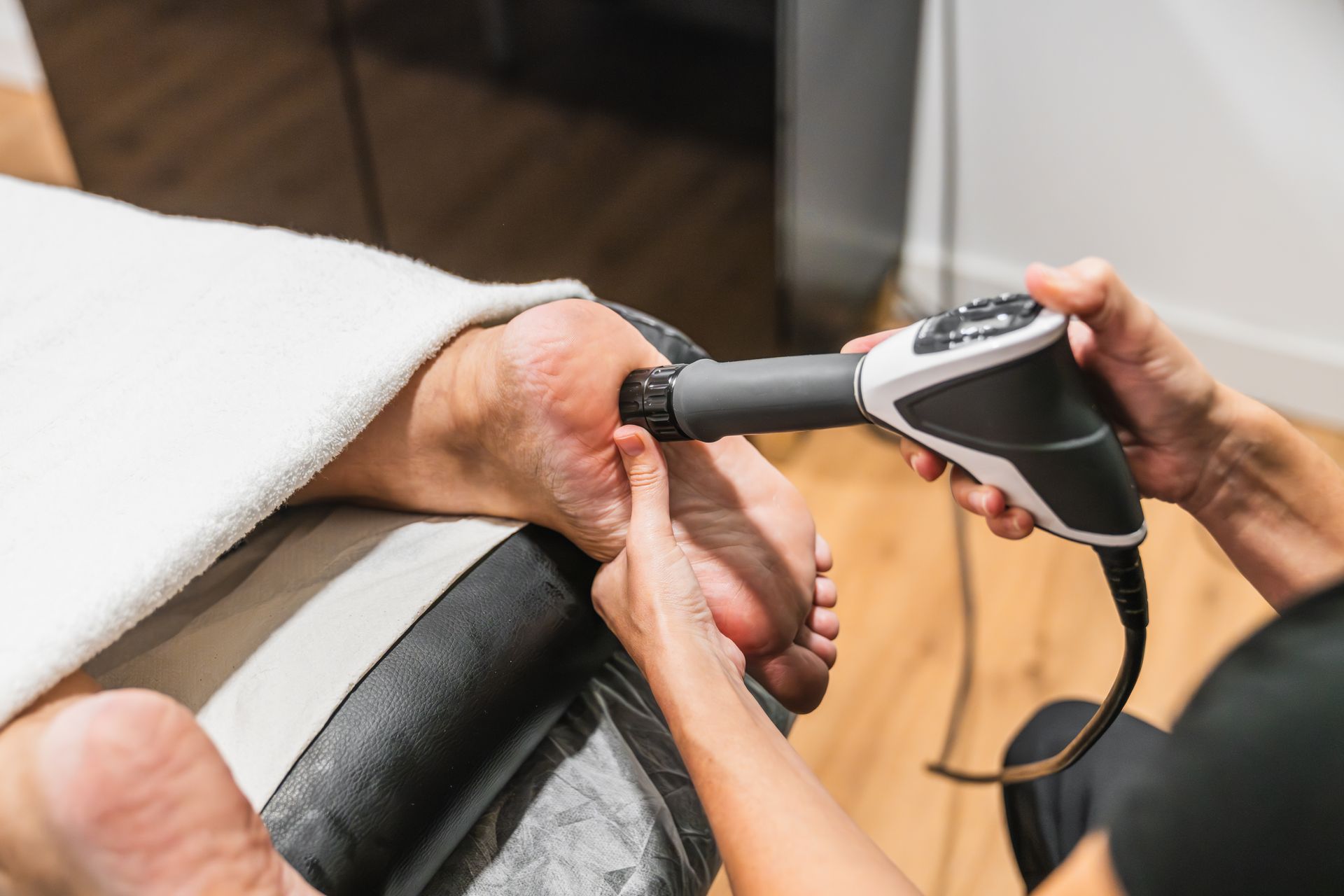
Shockwave therapy uses high-energy acoustic waves delivered through a handheld device placed against your skin. These sound waves penetrate deep into your tissue, triggering biological responses that promote healing and reduce pain.
Think of it like jump-starting your body's natural healing process. The acoustic waves create controlled microtrauma in the damaged tissue, which signals your body to increase blood flow to the area, remove damaged cells, and build new healthy tissue.
How Shockwave Therapy Works
Research has identified several mechanisms through which shockwave therapy promotes healing:
Neovascularization (New Blood Vessel Formation): Shockwave therapy stimulates the growth of new blood vessels in the treated area. Increased blood flow brings oxygen, nutrients, and healing factors to the damaged plantar fascia, accelerating recovery.
Pain Reduction: The acoustic waves disrupt pain signals and reduce substance P, a neurotransmitter involved in pain transmission. This provides both immediate and long-term pain relief.
Tissue Regeneration: Shockwave therapy activates stem cells and promotes the formation of new, healthy tissue to replace damaged plantar fascia fibers.
Breaking Down Calcifications: In chronic plantar fasciitis, calcium deposits sometimes form in the heel. Shockwave therapy can break down these calcifications, reducing pain and improving tissue flexibility.
Reduced Inflammation: The treatment modulates inflammatory processes, helping resolve chronic inflammation that perpetuates plantar fasciitis pain.
Collagen Production: Shockwave therapy stimulates fibroblasts to produce new collagen, strengthening the plantar fascia and supporting long-term healing.
The Science Behind Shockwave Therapy for Plantar Fasciitis
Multiple research studies support the effectiveness of shockwave therapy for plantar fasciitis:
Clinical Evidence of Effectiveness
A comprehensive review published in Frontiers in Immunology examined how shockwave therapy affects plantar fasciitis at the cellular level. The research found that shockwave therapy triggers multiple healing mechanisms, including increased growth factor production, enhanced cell proliferation, and improved tissue organization. These biological changes translate to significant pain reduction and functional improvement in plantar fasciitis patients.
Research published in the European Spine Journal analyzed outcomes from shockwave therapy treatment for plantar fasciitis. The study demonstrated that patients experienced substantial pain reduction and improved function after shockwave therapy, with benefits lasting for months after treatment completion. The researchers concluded that shockwave therapy offers an effective non-invasive option for chronic plantar fasciitis.
A study in Disability and Rehabilitation compared shockwave therapy to other treatment approaches for plantar fasciitis. The findings showed that shockwave therapy produced superior outcomes in reducing pain and improving foot function compared to many conservative treatments, particularly for cases that hadn't responded to initial care.
Additional research published in Clinical Rehabilitation examined long-term outcomes of shockwave therapy for plantar fasciitis. The study found that improvements in pain and function were maintained at 6-month and 12-month follow-ups, demonstrating that shockwave therapy provides lasting benefits, not just temporary relief.
Understanding Shockwave Therapy Mechanisms
Research has revealed fascinating details about how shockwave therapy works at the cellular and molecular level:
Studies show that shockwave therapy activates mechanotransduction pathways, where mechanical energy from the acoustic waves is converted into biochemical signals. These signals trigger a cascade of healing responses including increased production of growth factors like VEGF (vascular endothelial growth factor) and TGF-β1 (transforming growth factor beta-1), which are essential for tissue repair and regeneration.
The treatment also influences the extracellular matrix, the structural framework that supports cells in the plantar fascia. Shockwave therapy helps reorganize disorganized collagen fibers that develop in chronic plantar fasciitis, improving tissue strength and flexibility.
Research has demonstrated that shockwave therapy modulates inflammatory mediators, reducing chronic inflammation while promoting the transition from inflammatory to regenerative healing phases. This helps break the cycle of ongoing tissue damage and pain.
Types of Shockwave Therapy
There are two main types of shockwave therapy used for plantar fasciitis:
Focused Shockwave Therapy (F-ESWT)
Focused shockwave therapy delivers high-energy acoustic waves to a precise, targeted area. The waves converge at a specific focal point deep within the tissue, making this approach ideal for treating localized areas of damage in the plantar fascia.
Characteristics:
- Higher energy levels
- Precise targeting
- Deeper tissue penetration
- Typically requires fewer treatment sessions
- May cause more discomfort during treatment
Best for: Well-defined heel pain, specific areas of plantar fascia damage, insertional plantar fasciitis at the heel.
Radial Shockwave Therapy (R-ESWT)
Radial shockwave therapy disperses acoustic waves over a broader area. The waves radiate outward from the application point, treating a larger tissue region.
Characteristics:
- Lower to moderate energy levels
- Broader treatment area
- More superficial tissue penetration
- May require more treatment sessions
- Generally more comfortable during treatment
Best for: Diffuse heel and arch pain, treating both the plantar fascia and surrounding tissues, patients sensitive to treatment discomfort.
Both types of shockwave therapy are effective for plantar fasciitis. At Life Medical, we determine which approach is best based on your specific condition, pain pattern, and treatment goals.
What to Expect During Shockwave Therapy Treatment
Understanding the treatment process helps you feel confident and prepared for your shockwave therapy sessions.
Initial Evaluation
Your shockwave therapy journey begins with a comprehensive evaluation:
- Discussion of your plantar fasciitis history and symptoms
- Physical examination of your foot and heel
- Assessment of pain location and severity
- Review of previous treatments you've tried
- Evaluation of your overall health and medical history
This evaluation helps us determine if shockwave therapy is appropriate for your condition and develop a personalized treatment plan.
The Treatment Session
Here's what happens during a typical shockwave therapy session:
Preparation: You'll be positioned comfortably, usually lying on your stomach with your foot accessible. The treatment area is identified and marked.
Gel Application: A coupling gel is applied to your heel and arch, similar to ultrasound gel. This helps the acoustic waves transmit effectively into your tissue.
Treatment Delivery: The shockwave device is placed against your heel. You'll feel pulsing sensations as the acoustic waves are delivered to the affected area. The intensity starts lower and can be adjusted based on your comfort level.
Duration: Each treatment session typically lasts 10-15 minutes.
Post-Treatment: The gel is wiped off, and you're free to walk and resume normal activities immediately.
Treatment Protocol
At Life Medical, our shockwave therapy protocol for plantar fasciitis is designed for optimal results:
Number of sessions: Most patients receive 4-12 treatment sessions for optimal results. The exact number depends on:
- Severity and chronicity of your plantar fasciitis
- Your individual response to treatment
- Whether you have heel spurs or calcifications
- Compliance with home exercises and activity modifications
Frequency: Sessions are typically scheduled 1-2 times per week, depending on your response to therapy. This frequency allows time for healing responses between treatments while maintaining therapeutic momentum.
Energy levels: Treatment intensity is adjusted based on your pain tolerance and response to therapy. We typically start at lower energy levels and increase as your tissues adapt and symptoms improve.
Total treatment course: The complete treatment typically spans 4-12 weeks, depending on the number of sessions needed.
What Does Shockwave Therapy Feel Like?
Patients describe the sensation differently, but common experiences include:
- Pulsing or tapping feeling
- Mild to moderate discomfort at the treatment site
- Temporary increase in pain intensity during the session
- Sensation similar to deep massage or pressure
The discomfort is usually tolerable and brief, lasting only during the actual treatment. Most patients find each subsequent session more comfortable as inflammation decreases and tissue begins healing.
Local anesthesia is generally not used because it can reduce the effectiveness of the treatment. However, treatment intensity can be adjusted to maintain your comfort.
Shockwave Therapy Results and Timeline
Immediate Effects
Some patients experience immediate pain relief after their first shockwave therapy session. However, this is not universal, and many patients notice initial improvement after 2-3 sessions.
It's important to understand that shockwave therapy works by stimulating healing, not just masking pain. The full benefits develop gradually as new tissue forms and inflammation resolves.
Short-Term Response (Weeks 1-4)
During and immediately after the treatment course:
- Gradual reduction in heel pain intensity
- Decreased morning stiffness and first-step pain
- Improved ability to walk longer distances
- Less pain during daily activities
- Some patients experience temporary soreness after treatments
Medium-Term Results (Months 1-3)
As healing progresses over the first few months:
- Continued pain reduction
- Improved foot function
- Return to activities you'd been avoiding
- Reduced or eliminated need for pain medications
- Better tolerance for standing and walking
Long-Term Outcomes (Months 3-12)
Research shows that shockwave therapy benefits continue to improve over time:
- Sustained pain relief
- Full or nearly full return to normal activities
- Improved quality of life
- Lasting improvements in foot function
- Low recurrence rates when combined with appropriate self-care
Studies demonstrate that 70-90% of plantar fasciitis patients experience significant improvement with shockwave therapy, with many achieving complete resolution of symptoms.
Who Is a Good Candidate for Shockwave Therapy?
Shockwave therapy is particularly effective for certain plantar fasciitis cases:
Ideal Candidates
Chronic plantar fasciitis: You've had heel pain for 6 months or longer that hasn't improved with conservative treatments like rest, stretching, orthotics, or physical therapy.
Recurrent plantar fasciitis: Your heel pain improves temporarily but keeps coming back.
Activity limitations: Plantar fasciitis significantly affects your ability to work, exercise, or enjoy daily activities.
Surgery alternative: You want to avoid surgical intervention and are looking for effective non-invasive options.
Failed conservative care: You've tried multiple treatments without adequate relief, including stretching, night splints, injections, or anti-inflammatory medications.
When Shockwave Therapy May Not Be Appropriate
Certain conditions may make shockwave therapy unsuitable:
- Pregnancy
- Blood clotting disorders or current use of blood thinners
- Local infections in the treatment area
- Tumors near the treatment site
- Severe circulatory problems in the foot
- Certain nerve disorders
During your evaluation at Life Medical, we'll review your complete medical history to ensure shockwave therapy is safe and appropriate for you.
Shockwave Therapy vs. Other Plantar Fasciitis Treatments
How does shockwave therapy compare to other treatment options?
Shockwave Therapy vs. Corticosteroid Injections
Corticosteroid injections:
- Provide temporary pain relief
- Don't promote healing
- May weaken plantar fascia tissue with repeated use
- Risk of plantar fascia rupture
- Benefits typically last weeks to months
Shockwave therapy:
- Stimulates actual tissue healing
- Improves tissue strength over time
- No risk of tissue weakening
- Benefits continue to improve after treatment
- Longer-lasting results
Shockwave Therapy vs. Surgery
Plantar fascia release surgery:
- Invasive procedure requiring incision
- Longer recovery time (weeks to months)
- Surgical risks and complications
- Permanent alteration of foot structure
- Reserved for severe, resistant cases
Shockwave therapy:
- Non-invasive, no incisions
- Immediate return to normal activities
- Minimal side effects
- Preserves normal foot anatomy
- Effective for most chronic cases
Shockwave Therapy vs. Conservative Care Alone
Conservative treatments (stretching, orthotics, rest):
- Important first-line treatments
- Effective for many acute cases
- Less effective for chronic plantar fasciitis
- May take months to show improvement
- Some cases don't respond adequately
Shockwave therapy:
- Accelerates healing beyond conservative care alone
- Particularly effective for chronic cases
- Works well when conservative treatments have failed
- Measurable results in weeks rather than months
- Can be combined with conservative approaches
Combining Shockwave Therapy with Other Treatments
Shockwave therapy often works best as part of a comprehensive treatment approach.
Class IV Laser Therapy
At Life Medical, we recently invested in advanced Class IV laser technology to enhance our plantar fasciitis treatment options. Class IV laser therapy is an excellent complement to shockwave therapy.
What is Class IV Laser Therapy?
Class IV laser therapy, also called high-intensity laser therapy (HILT), uses specific wavelengths of light to penetrate deep into tissue and promote healing at the cellular level. Unlike lower-powered lasers, Class IV lasers deliver therapeutic energy more quickly and penetrate deeper into damaged tissue.
How Class IV Laser Therapy Works for Plantar Fasciitis:
Research demonstrates that laser therapy provides multiple therapeutic benefits for plantar fasciitis:
Accelerates healing: Studies published in Lasers in Medical Science show that low-level laser therapy significantly accelerates tissue repair in plantar fasciitis patients. Class IV lasers, with their higher power output, provide even more pronounced healing effects by:
- Stimulating cellular energy production (ATP synthesis)
- Enhancing fibroblast activity for collagen production
- Increasing cell proliferation and tissue regeneration
- Promoting blood vessel formation (angiogenesis)
- Accelerating the transition from inflammatory to healing phases
Reduces pain: Research in BMC Musculoskeletal Disorders demonstrates that laser therapy provides significant pain reduction in plantar fasciitis. The mechanism includes:
- Reducing inflammatory mediators like prostaglandins
- Modulating pain perception at nerve endings
- Decreasing pressure on pain receptors through reduced swelling
- Increasing endorphin production for natural pain relief
Reduces inflammation: Laser therapy effectively decreases inflammation by:
- Modulating inflammatory cytokines
- Reducing edema and swelling
- Improving lymphatic drainage
- Decreasing the concentration of inflammatory chemicals in tissue
Improves tissue quality: The photobiomodulation effects of Class IV laser include:
- Enhanced collagen synthesis for stronger plantar fascia
- Improved tissue organization and structure
- Increased tensile strength of healing tissue
- Reduction of scar tissue formation
Increases blood flow: Laser therapy promotes:
- Vasodilation for increased circulation
- Better oxygen and nutrient delivery to damaged tissue
- Enhanced removal of metabolic waste products
- Improved healing environment
Combining Shockwave and Class IV Laser Therapy: At Life Medical, we often combine shockwave therapy with Class IV laser therapy for superior results. This multi-modal approach offers several advantages:
Complementary mechanisms: While shockwave therapy creates controlled microtrauma to trigger healing responses, laser therapy reduces inflammation and accelerates the healing process. Used together, they address plantar fasciitis from multiple therapeutic angles.
Enhanced outcomes: Research shows that combining therapeutic modalities often produces better results than any single treatment alone. Patients receiving both shockwave and laser therapy typically experience:
- Faster pain reduction
- Quicker return to activities
- More complete tissue healing
- Lower recurrence rates
Treatment protocol: When combining therapies, we typically:
- Begin each session with Class IV laser therapy to reduce inflammation and prepare tissues
- Follow with shockwave therapy to stimulate deep healing responses
- Conclude with additional laser therapy to calm tissues and enhance recovery
Non-invasive and safe: Both therapies are completely non-invasive with no known adverse interactions, making them ideal to combine.
Treatment schedule: Combination therapy typically involves:
- 1-2 sessions per week
- Each session includes both shockwave and laser treatment
- Total course of 4-12 sessions depending on response
- Progressive improvement throughout treatment
Chiropractic Care
Our chiropractic care services complement shockwave therapy by:
- Addressing biomechanical issues contributing to plantar fasciitis
- Improving foot and ankle joint mobility
- Correcting gait abnormalities
- Reducing compensatory stress on surrounding structures
Combining shockwave therapy with chiropractic adjustments addresses both tissue damage and mechanical dysfunction.
Physical Therapy
Physical therapy enhances shockwave therapy outcomes through:
- Targeted stretching to maintain flexibility gains
- Strengthening exercises for foot and ankle muscles
- Balance and proprioception training
- Progressive return to activities
- Movement pattern retraining
Nutritional Support
Our nutritional therapy services support healing by:
- Reducing systemic inflammation through diet
- Ensuring adequate nutrients for tissue repair
- Supporting healthy weight management
- Optimizing overall wellness
Pain Management
For patients with significant discomfort, our pain treatment services provide additional support during your recovery.
Integrative Approach
Life Medical's integrative medicine philosophy means we create comprehensive treatment plans that address all factors contributing to your plantar fasciitis, maximizing your results.
What to Do After Shockwave Therapy
Supporting your healing between and after shockwave therapy sessions is important:
Immediately After Treatment
Activity: You can walk immediately and resume normal daily activities. Avoid high-impact exercise for 48 hours after each session.
Ice: Applying ice to your heel for 15-20 minutes after treatment can reduce any temporary discomfort.
Hydration: Drink plenty of water to support your body's healing processes.
Footwear: Wear supportive shoes with good cushioning.
Between Sessions
Continue home exercises: Keep doing the stretches and exercises recommended by your provider.
Activity modifications: Avoid activities that caused your plantar fasciitis until your provider clears you.
Footwear: Maintain good footwear habits with supportive, well-cushioned shoes.
Report changes: Let your provider know how you're responding to treatment.
After Completing Treatment
Gradual return to activities: Slowly increase walking, standing, and exercise intensity.
Maintain flexibility: Continue daily calf and plantar fascia stretches.
Strengthen foot muscles: Regular foot strengthening exercises prevent recurrence.
Monitor symptoms: Watch for early signs of returning pain and address them promptly.
Follow-up care: Attend recommended follow-up appointments to assess long-term results.
Potential Side Effects and Safety
Shockwave therapy is generally very safe, but some temporary side effects can occur:
Common Side Effects
Temporary pain increase: Some patients experience increased heel pain for 1-2 days after treatment. This is normal and typically resolves quickly.
Redness or swelling: Mild redness or swelling at the treatment site may occur and usually resolves within 24-48 hours.
Bruising: Occasional minor bruising can develop, particularly in the first session.
Skin sensitivity: The treated area may feel tender to touch for a day or two.
Rare Side Effects
Serious complications are uncommon but can include:
- Significant swelling
- Prolonged pain increase
- Skin changes or damage (very rare)
At Life Medical, we carefully monitor your response to treatment and adjust protocols as needed to minimize side effects while maximizing benefits.
Cost and Insurance Coverage
The cost of shockwave therapy varies based on several factors:
Number of sessions: Most patients need 4-12 sessions for optimal results.
Combination treatments: Adding Class IV laser therapy or other modalities may affect total cost.
Treatment protocol: Focused vs. radial shockwave therapy may have different costs.
Insurance coverage: Coverage for shockwave therapy varies by insurance plan. Some plans cover it for plantar fasciitis, while others consider it investigational.
Out-of-pocket options: For patients without coverage, we offer transparent pricing and payment options.
Contact Life Medical at (952) 933-8900 to discuss specific costs and verify your insurance coverage. You can also visit our pricing page for more information.
Why Choose Life Medical for Shockwave Therapy?
Advanced Technology
We use state-of-the-art shockwave therapy equipment and our new Class IV laser to deliver effective, comfortable treatment with superior results.
Experienced Providers
Our team has extensive training and experience in shockwave therapy, laser therapy, and treating plantar fasciitis. We understand how to optimize treatment protocols for best results.
Comprehensive Approach
As a full-service healthcare practice offering primary care, chiropractic care, physical therapy, and other services, we can address all aspects of your plantar fasciitis.
Personalized Treatment
We customize every treatment plan based on your specific condition, response to therapy, and goals.
Proven Results
We've helped numerous patients find lasting relief from chronic plantar fasciitis through our advanced treatment options.
Convenient St. Louis Park Location
Life Medical is located at 4201 Excelsior Boulevard, St. Louis Park, MN 55416, making advanced plantar fasciitis treatment accessible throughout the Twin Cities metro area.
Getting Started with Shockwave Therapy
If you're struggling with chronic plantar fasciitis that hasn't responded to other treatments, shockwave therapy combined with our new Class IV laser may be the solution you need.
Take the first step toward lasting heel pain relief:
Call Life Medical at (952) 933-8900 to schedule a consultation and learn if shockwave therapy is right for you.
Our St. Louis Park office is conveniently located at 4201 Excelsior Boulevard, St. Louis Park, MN 55416.
Visit our services page to learn more about our comprehensive approach to plantar fasciitis treatment, or use our patient portal to request an appointment online.
Don't let chronic heel pain control your life. Shockwave therapy and Class IV laser offer proven, non-invasive paths to lasting relief. Contact us today to discover if these advanced treatments are right for you.
FAQs About Shockwave Therapy for Plantar Fasciitis
Does shockwave therapy hurt?
Most patients experience some discomfort during treatment, described as pulsing pressure or deep tapping. The sensation is usually tolerable and lasts only during the 10-15 minute session. Treatment intensity can be adjusted for your comfort.
How many shockwave therapy sessions do I need for plantar fasciitis?
Most patients need 4-12 sessions for optimal results, scheduled 1-2 times per week. Your provider will recommend a specific protocol based on your condition severity and response to treatment.
How long does it take for shockwave therapy to work?
Some patients notice improvement after 2-3 sessions, but full benefits typically develop over several weeks to months as tissue healing progresses. Research shows continued improvement for up to 12 months after treatment.
Is shockwave therapy covered by insurance?
Coverage varies by insurance plan. Some insurers cover shockwave therapy for plantar fasciitis, while others may not. Contact our office to verify your specific coverage.
Can I walk after shockwave therapy?
Yes. You can walk immediately after treatment and resume normal daily activities. Avoid high-impact exercise for 48 hours after each session to allow healing.
What is the success rate of shockwave therapy for plantar fasciitis?
Research shows that 70-90% of plantar fasciitis patients experience significant improvement with shockwave therapy, with many achieving complete resolution of symptoms.
How is shockwave therapy different from ultrasound?
While both use sound waves, shockwave therapy delivers much higher energy levels in short pulses, creating different biological effects. Shockwave therapy penetrates deeper and triggers more significant healing responses than therapeutic ultrasound.
Can plantar fasciitis come back after shockwave therapy?
Shockwave therapy provides lasting results for most patients, especially when combined with appropriate self-care, stretching, and footwear modifications. Recurrence rates are low compared to many other treatments.
What is Class IV laser therapy and how does it help?
Class IV laser therapy uses high-intensity light to reduce inflammation, accelerate healing, and decrease pain in the plantar fascia. It works excellently alongside shockwave therapy for enhanced results.
Can I get both shockwave and laser therapy in the same session?
Yes. At Life Medical, we often combine both therapies in a single treatment session for superior outcomes. The treatments complement each other and are safe to use together.
FAQs About Life Medical
What other conditions can shockwave therapy treat?
Besides plantar fasciitis, shockwave therapy is effective for Achilles tendinitis, tennis elbow, shoulder tendinitis, patellar tendinitis, and other chronic tendon and soft tissue conditions.
Do I need a referral for shockwave therapy?
Most patients don't need a referral, but check with your insurance provider as some plans may require one.
What services does Life Medical offer besides shockwave therapy?
We're a comprehensive healthcare practice offering primary care, chiropractic care, physical therapy, pain treatment, and many other integrative medicine services.
Where is Life Medical located?
We're located at 4201 Excelsior Boulevard, St. Louis Park, MN 55416. Visit our locations page for directions.
How do I schedule a shockwave therapy consultation?
Call us at (952) 933-8900 or use our patient portal to request an appointment.
Chronic plantar fasciitis doesn't have to be permanent. Shockwave therapy combined with Class IV laser offers scientifically proven, non-invasive solutions that address the root cause of your heel pain. Contact Life Medical today to discover if these advanced treatments can help you get back to pain-free walking.
Disclaimer: The information provided on this blog is for general informational purposes only and is not intended as, and should not be considered, medical advice. All information, content, and material available on this blog are for general informational purposes only. Readers are advised to consult with a qualified healthcare professional for medical advice, diagnosis, or treatment. The author and the blog disclaim any liability for the decisions you make based on the information provided. Always seek the advice of your physician or other qualified health provider with any questions you may have regarding a medical condition.